Welding careers across the Tasman: does the Australian workshop have secured work?
Tips · 2026-09-30 · 3 min read
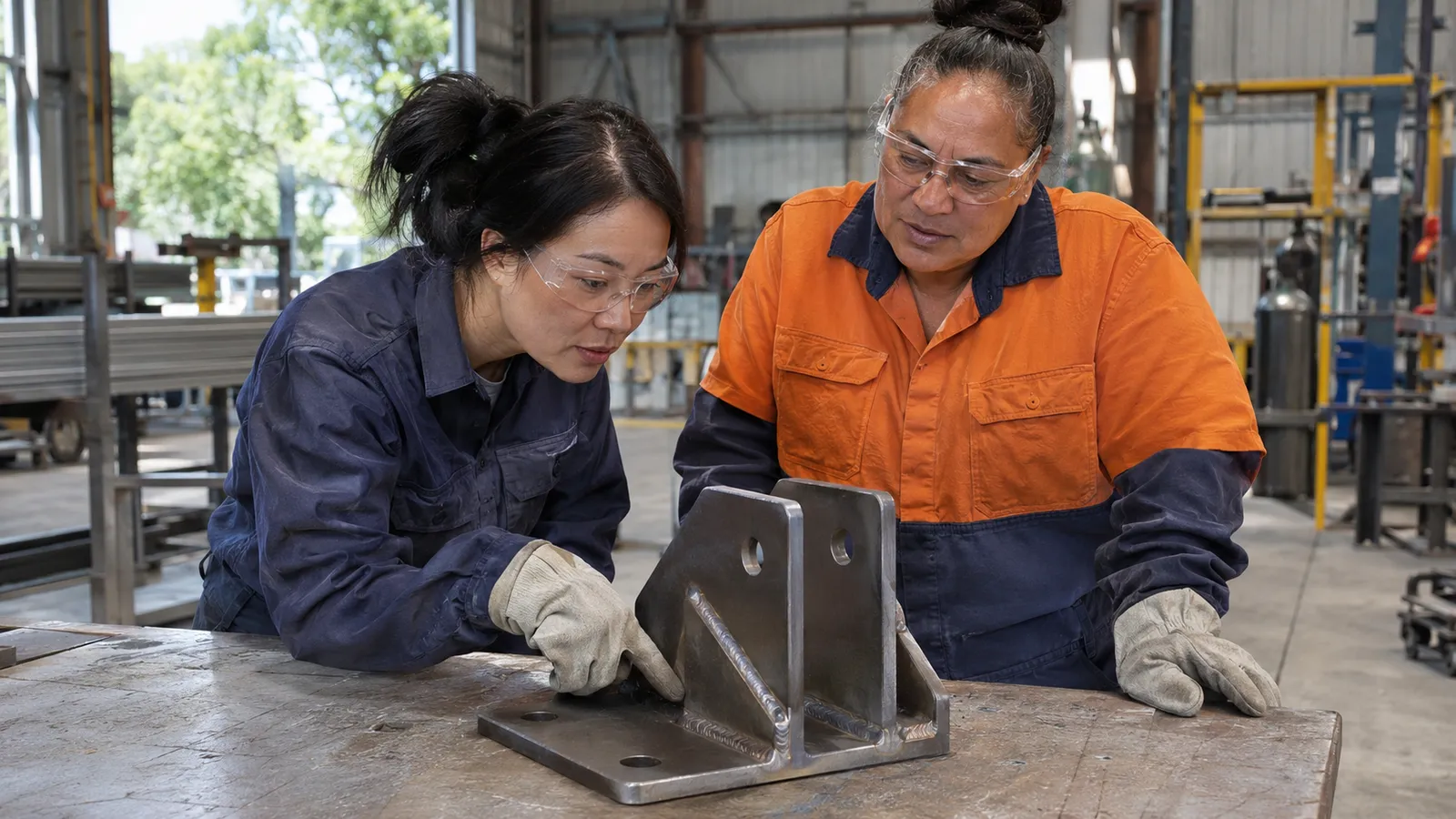
For a welder considering New Zealand and Australia, compare the employer's secured work alongside the industry's need for skills. The Australian survey account discussed here describes both shortages and spare workshop capacity. Those findings are useful context, but they do not establish New Zealand demand or confirm that an Australian employer is recruiting.
A shortage can coexist with a weak contract pipeline
The source says 89.2 per cent of respondents believed Australia lacked qualified welders for infrastructure and defence work ahead. Yet six in ten had three months or less of confirmed work, and one in five had no confirmed pipeline.
Almost 60 per cent of workshops operated below 75 per cent capacity. The practical issue can therefore involve matching skills and contracts rather than simply adding staff. Ask what work supports the vacancy you would fill.
Standards need evidence beyond a trade label
The account describes concern about fabricated products meeting Australian standards and requests for independent verification. It also discusses stronger local content rules and a proposed Australian Fabrication Authority.
These were industry requests. They should not be presented as measures already implemented or as an immigration rule. For an application, describe the processes, materials and quality responsibilities you have actually handled.
Read related coverage of New Zealand trade recognition and project pipeline questions.
Training investment is a question for the actual employer
Despite cost pressure, half the survey respondents increased technology investment. The account gives 42.8 per cent increasing staff training and 39.2 per cent increasing research and development investment.
A research pattern does not establish that your prospective employer offers training. Ask what support is part of the role and what competence is required at entry. Overseas experience can be valuable without automatically satisfying local recognition.
- Match your welding or fabrication background to the duties.
- Prepare evidence of processes and quality work.
- Ask about confirmed contracts and work continuity.
- Check recognition and immigration requirements for the destination.
Compare trade job listings against your evidence. A CV describing relevant fabrication responsibilities helps a recruiter assess practical fit.
Do not assume an Australian shortage creates sponsorship or that the same qualification assessment applies in New Zealand. The employment offer and destination conditions remain separate checks.
Common mistakes in a welding destination comparison
Avoid treating workshop capacity as open jobs, survey beliefs as a national vacancy count or proposed procurement changes as current law. Keep the actual employer's conditions visible.
Questions about Australian fabrication opportunities
Does spare capacity mean immediate hiring?
No. Confirm the contracts and role behind the vacancy.
Do Australian findings establish New Zealand demand?
No. New Zealand needs its own evidence.
Does the survey promise staff training?
No. Ask the particular employer.
What should the application demonstrate?
Relevant welding work, quality responsibilities and requested credentials.
Compare a credible workshop opportunity
Use the survey to ask useful questions, then assess suitable work and verified conditions. That keeps the career decision grounded in a real role.
#welding #new zealand #australia #fabrication
 A trade qualification across the Tasman: is Australian demand enough to change your plan?
 Office careers across the Tasman: which parts of your work need human judgement?
 Trade study across the Tasman: does the course develop the work employers need?