Electrician jobs New Zealand: can your licence plan match the start date?
Visa guide · 2026-10-21 · 7 min read
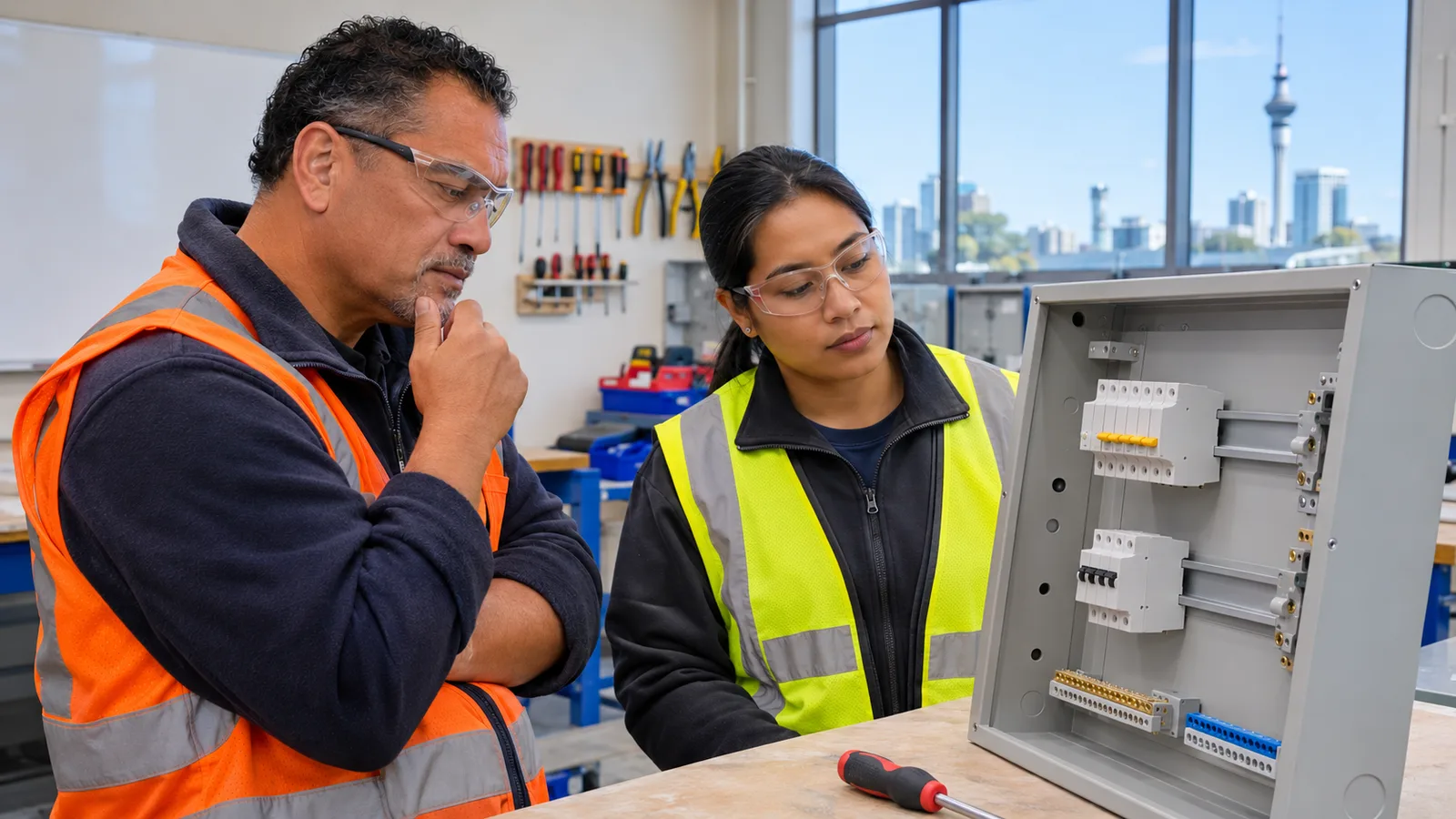
Electrician jobs New Zealand employers advertise need more than a match between a trade title and your experience. The proposed duties must fit your professional authority, and the start date must fit the recognition process. Establish those points before turning an employer's interest into a confirmed work plan.
The Electrical Workers Registration Board (EWRB) is the relevant New Zealand authority for the overseas-trained pathway described here. Registration, supervised work, a Practising Licence and immigration permission each answer a different question. Keep the actual stage clear when you explain your readiness to an employer.
Electrician jobs New Zealand: begin with the work you would perform
Ask for a clear account of the duties and working arrangement. A position might use a familiar title while involving equipment or responsibilities different from your previous work. Identify what you would personally be expected to do, rather than relying on the company's broad description of its services.
Then check the appropriate registration class with the Board. Overseas-trained electrical workers apply in the right class, rather than treating every overseas electrical credential as equivalent. Describe the qualifications and licences you actually hold, including their country and scope.
The EWRB overseas-trained guidance gives the official process. Use it for the relevant professional enquiry instead of assuming an employer's recruitment checklist settles your licensing position.
Our article on recognition alongside a New Zealand trade move connects those questions. Demand for experience does not remove the need for the appropriate authority to perform the work.
Discuss the stages before discussing a firm starting day
The verified overseas-trained process gives an approximate time of twelve weeks and a fee of NZ$1,650 including GST. Those figures belong to the professional process described by EWRB. They are not the cost or completion period for every part of moving to New Zealand.
The pathway includes obtaining a Limited Certificate and working under supervision before a Practising Licence. A Limited Certificate is a specific stage with its own conditions, rather than a reason to describe yourself as holding the final permission already.
Electrical workers need a Practising Licence for prescribed electrical work. The proposed duties and the applicable stage need to fit the Board's framework. If a point about supervision or scope is unclear, ask the Board a precise question rather than relying on an informal assurance.
| Record or stage | Question it answers | What to keep separate |
|---|---|---|
| Overseas qualifications and experience | What training and work you can evidence | New Zealand authority to perform prescribed work |
| EWRB application | The registration class and assessment underway | A completed decision |
| Limited Certificate | The supervised stage and its actual conditions | An unrestricted final outcome |
| Practising Licence | Professional permission relevant to prescribed electrical work | Immigration permission and a job offer |
Make overseas experience understandable without enlarging it
Write a chronology of roles, projects and responsibilities. Distinguish installation, maintenance, testing, fault-finding or supervision where those were genuinely part of your work. Do not add tasks simply because they appear in an attractive advertisement.
Explain the level at which you worked. Assisting, working independently and supervising others are different experiences. If a reference describes only a company-wide activity, ask whether it can accurately clarify your own contribution instead of claiming every service the business provided.
A CV showing your real electrical responsibilities helps an employer read that history. Keep the credential names exact and describe a pending process as pending.
Use actual vacancies to compare the work requested. Our visa guide library is a separate starting point for immigration research, rather than a substitute for the Board's professional requirements.
Read Tier 2 through Electrician General and its conditions
Electrician (General) is among the verified Green List Tier 2 examples. Check the exact entry in Green List Appendix 13 rather than extending the name to every electrical or engineering position.
Tier 2 relates to the Work to Residence Visa. The verified route needs twenty-four months of work in a Tier 2 job within the thirty months before applying, the required wage rate, an age of 55 or younger and English. The listed visa cost starts at NZ$6,450.
The Work to Residence requirements need to be considered together. A job on the list does not turn previous overseas experience into every kind of qualifying New Zealand work, or remove the role-specific professional conditions.
Our coverage of trade work and a regional residence plan concerns another useful part of the research. Identify which pathway is being discussed before borrowing its duration or qualification test for your own plan.
Keep the AEWV skills test in its own part of the file
The Accredited Employer Work Visa (AEWV) is an employer-led temporary work route. Its verified minimum skills rule requires at least two years of relevant work experience, measured as full-time equivalent, or a qualification at level 4 or higher in the same field as the job. A bachelor's degree or higher can be in any field.
That immigration rule does not replace EWRB's process or establish authority for regulated duties. A person can have relevant employment experience while still needing to complete professional recognition. Keep the evidence and the decision-maker attached to each requirement.
Read the AEWV information for the actual visa enquiry. If an employer discusses a different role while recognition is underway, identify the proposed duties and permission questions afresh instead of assuming every task fits the original plan.
Ask what a workable first stage would look like
Discuss how the employer would organise the work within the professional conditions applying to you. Ask who can explain supervision and the responsibilities you would actually be assigned. Frame these as questions, rather than assuming the business supplies a particular training arrangement.
Our account of employer planning and recruitment timing gives useful context. A preferred starting day is a business need, not confirmation that a professional or immigration process will finish by then.
- Identify the actual duties and relevant electrical registration class.
- Check the overseas-trained pathway using genuine credentials.
- Record which stage is complete and which remains underway.
- Clarify the work and supervision arrangement with the employer.
- Assess immigration permission and any residence plan separately.
Common mistakes when an offer sounds urgent
Do not assume an overseas licence is the New Zealand licence, a Limited Certificate is an unrestricted final stage or an approximate twelve-week process is a confirmed personal deadline. Avoid treating a Tier 2 occupation as a residence decision. The proposed work must remain consistent with the permissions actually held.
Frequently asked questions
Does an overseas electrician licence automatically authorise New Zealand electrical work?
Overseas credentials do not replace the New Zealand registration and licensing process. Check the Electrical Workers Registration Board pathway for the work you intend to perform.
What does the Limited Certificate stage involve?
The verified overseas-trained pathway includes a Limited Certificate and work under supervision before a Practising Licence. Read the conditions actually applying to your stage.
How long does the overseas-trained registration process take?
The verified guidance gives about twelve weeks and a NZ$1,650 fee including GST. An approximate process time should not be presented as a fixed completion date for your file.
Does Electrician General on Tier 2 mean immediate residence?
The Work to Residence route requires qualifying work and other conditions. A Green List occupation name alone does not establish a completed residence assessment.
Can an AEWV replace the electrical practising licence?
Immigration permission and professional authority serve different purposes. The work arrangement must fit both the relevant visa conditions and electrical licensing requirements.
Key takeaways
- Start with actual duties and the relevant EWRB class.
- Describe each licensing stage accurately.
- Clarify supervision before relying on a start date.
- Read the complete Tier 2 residence conditions.
- Keep professional and immigration decisions separate.
Last checked: 21 October 2026 against the official pages linked above.
To discuss the immigration requirements alongside your professional plan, book a consultation with licensed immigration advisers in New Zealand or lawfully exempt professionals.
#electrician jobs new zealand #ewrb registration #limited certificate nz #electrician practising licence #green list electrician #overseas electrical workers
 Australia employer sponsored visa 2026: will the offer support the next step?
 New Zealand immigration changes 2026: are you mixing current rules with future dates?
 NZQA IQA fees 2027: could the portal closure disrupt your qualification plan?